

Governments in New Zealand and Australia are making significant changes to skilled migration policies, aiming to simplify the process and address ongoing labor shortages. For skilled professionals looking to relocate, these adjustments could mean easier access to work opportunities. While details are still emerging, here’s a breakdown of what’s changing and how it might impact job seekers.
New Zealand: Easier Access for Skilled Migrants
New Zealand is implementing a series of reforms to the Accredited Employer Work Visa (AEWV), starting in 2025. These updates aim to streamline the process and increase access for skilled workers:
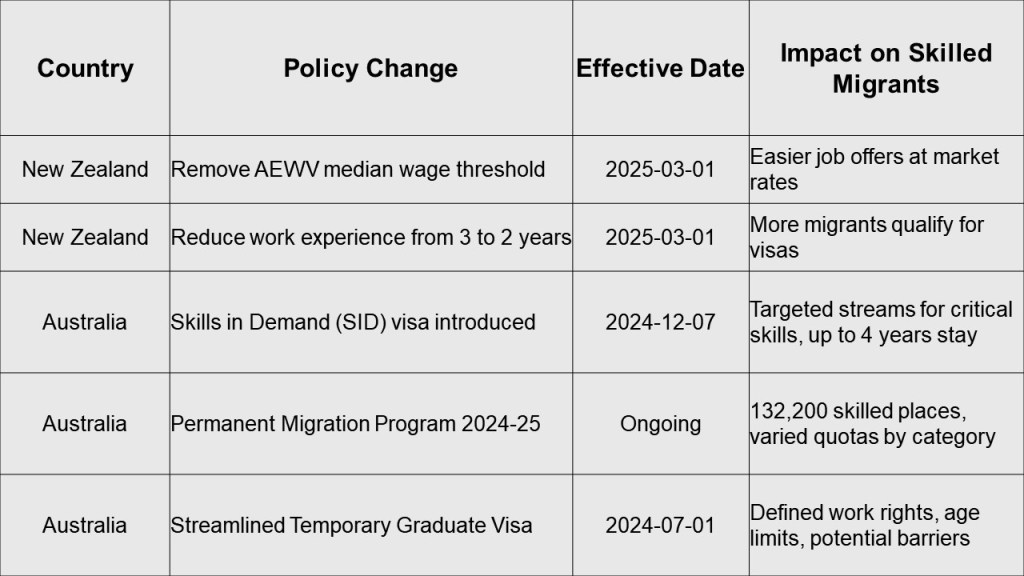
- Removal of Median Wage Threshold (Effective March 2025): Employers will no longer need to offer salaries above the national median wage. Instead, wages can be based on market rates, making more job opportunities accessible to skilled migrants.
- Reduced Work Experience Requirement (Effective March 2025): The minimum required work experience for visa eligibility is being reduced from three years to two, allowing more workers to qualify.
- New Seasonal Visa Pathways (Effective November 2025): These will include a multi-entry three-year visa for experienced workers and a seven-month single-entry visa for lower-skilled roles, particularly in agriculture.
- Streamlined Job Check Process (Effective July 2025): The government is working to simplify the employer Job Check process, reducing delays in hiring skilled workers.
These changes aim to make migration more accessible for professionals across various industries. However, eligibility still depends on employer demand and individual qualifications.
Australia: Overhaul of Skilled Migration Pathways
Australia is also restructuring its skilled migration system with new visa options and streamlined pathways:
- Introduction of the Skills in Demand (SID) Visa(December 2024): Replacing the Temporary Skills Shortage (TSS) visa, this new visa allows stays of up to four years and includes three streams:
- Core Skills: For occupations in demand.
- Specialist Skills: For highly skilled workers with higher salary thresholds.
- Labour Agreement: For occupations negotiated with industries.
- Permanent Migration Program Adjustments (2024-25): Australia has allocated 185,000 places, with 132,200 for skilled migrants. Employer-sponsored visas are increasing, while independent skilled migration quotas are reducing.
- Temporary Graduate Visa Changes (July 2024): This visa now has clearer work rights and duration limits, with an age cap of 35 for most applicants.
- New Ballot Process for Select Nationalities (October 2024): Certain countries, such as India and China, will have a lottery system for select visas, introducing an element of chance into the application process.
These adjustments are part of Australia’s broader Migration Strategy to attract skilled professionals and fill labor gaps.
What This Means for Skilled Migrants
The reforms in both countries are designed to:
- Reduce barriers for skilled professionals.
- Provide more opportunities through employer-sponsored pathways.
- Address workforce shortages in key industries such as construction, IT, healthcare, and agriculture.
However, eligibility criteria and employer preferences still play a crucial role in migration success. If you’re considering a move, staying informed about industry trends and job market demands will be key.
Need More Information?
For visa-related queries, consider consulting reputable immigration agencies such as New Zealand Shores and Australian Shores. If you’re seeking job search advice and professional guidance, Employment for Immigration provides tailored support for skilled migrants.
Final Thoughts
Both New Zealand and Australia are making it easier for skilled workers to enter their job markets, but the full impact of these changes will depend on implementation and industry needs. Staying informed and preparing strategically will be essential for those looking to take advantage of these new opportunities.










 Employment for Immigration to New Zealand, Australia and Beyond