

Market Updates, Niche job Reports

Low Pay – High Quality Entry Points into New Zealand (2025)

Opening Context: Minimum vs Median Wage

When it comes to pay in New Zealand, two numbers matter most: the minimum wage and the median wage. The minimum wage is the lowest legal pay an employer can offer — in 2025, NZD $23.15 per hour (≈NZD $48,150 annually on a 40-hour week). The median wage is the midpoint of all wages — half of workers earn below it, half above. In 2025, that sits at about NZD $31.50 per hour (≈NZD $65,500 annually). Immigration New Zealand uses the median wage as a marker: jobs paying below it often don’t qualify for fast-track residency, while jobs above may.


Why Low-Paid Jobs Still Matter for Migrants

Despite limited residency pathways, thousands of migrants take up low-paid work every year. For many, these jobs serve as:

  • Stepping stones — A way to enter New Zealand, gain work experience, and build connections.
  • Short-term opportunities — Some come from the Pacific Islands to work a few orchard or seafood seasons, then return home to buy land or a house.
  • Cultural experiences — Hospitality roles appeal to working holidaymakers who want to travel and immerse themselves in Kiwi life.

Because most people in these jobs don’t seek residency, Immigration NZ doesn’t regulate them as tightly. Employers benefit from flexibility, while migrants use them for income, adventure, or financial goals back home.


Bottom-Rung Job Categories

1. Hospitality & Food Services

  • Roles: Waitstaff, bartenders, kitchen hands, café assistants.
  • Pay Band: NZD $23–25/hr.
  • Migrant Share: ~35–40% in tourism hubs.
  • Expectations: Reliability is valued; experience helps but is not always required.

2. Retail & Accommodation

  • Roles: Checkout operators, retail assistants, hotel housekeeping, cleaners.
  • Pay Band: NZD $23–26/hr.
  • Migrant Share: ~30%.
  • Expectations: High turnover; employers often take on anyone dependable.

3. Agriculture & Horticulture

  • Roles: Orchard workers, vineyard staff, packhouse labour.
  • Pay Band: NZD $24–27/hr (piece rates may be higher in peak season).
  • Migrant Share: Up to 60% at harvest.
  • Expectations: No formal skills needed; willingness to do physical outdoor work is key.

4. Seafood & Food Processing

  • Roles: Mussel shuckers, fish processors, factory packers.
  • Pay Band: NZD $24–26/hr.
  • Migrant Share: >50% in some plants.
  • Expectations: Entry-level; repetitive and physical, but stable.

5. Aged Care & Support Roles

  • Roles: Caregivers, residential support staff.
  • Pay Band: NZD $25–28/hr.
  • Migrant Share: 25–30%.
  • Expectations: Some training preferred, but shortages mean many employers provide on-the-job induction.

Living on the Minimum Wage

  • For travellers: Backpackers and working holidaymakers can cover food, rent, and travel while saving modestly. Car-sharing, hostels, or van life keep costs low.
  • For families: Two adults on minimum wage (≈NZD $96,000 combined pre-tax) can manage in smaller towns — renting a house, running a car, and raising children is possible in Whanganui, Nelson, or Invercargill, though tighter in big cities.
  • In cities: Auckland and Wellington rents consume a larger share of minimum-wage income, making it harder for families without extra support.

International Comparisons (2025)

Country / RegionHourly Minimum WageEquivalent NZD/hrNotes
New ZealandNZD $23.15$23.15High relative to OECD peers
USA – New YorkUSD $16.00≈NZD $27Higher, but cost of living is steep
USA – CaliforniaUSD $16.00≈NZD $27Similar to NY
Canada – OntarioCAD $17.20≈NZD $20Slightly lower
UKGBP £11.44≈NZD $23Comparable
GermanyEUR €12.41≈NZD $22Similar
NetherlandsEUR €13.27≈NZD $24Slightly higher
NorwayCollective agreements≈NZD $29–32No statutory minimum
SwitzerlandCHF 22–24≈NZD $41–45Exceptionally high
JapanJPY ¥1,004≈NZD $10Much lower

Conclusion: Risks, Benefits & Next Steps

For migrants, the bottom rung of New Zealand’s job market comes with clear risks and benefits:

  • Benefits: Easy entry, low skill requirements, flexible hours, and opportunities to fund travel, savings, or education.
  • Risks: Limited residency pathways, physically demanding work, and difficulty affording life in big cities on one income.

These jobs aren’t glamorous, but they are essential to NZ’s economy — and for many migrants, they are the first step into a new chapter.

👉 To secure work more confidently and quickly, you can send your CV and job interests to Tate@employmentforimmigration.nz for personalised guidance and support.
Niche job Reports

Starting Point: Lower Paying Migrant Jobs in Australia (2025)

There are many pathways to migrate into Australia. The lower end makes perfect sense for some people.


Why Low-Paid Jobs Still Matter for Migrants

Thousands of migrants take on Australia’s lowest-paid jobs each year. These roles are attractive for:

  • Stepping stones — A way to gain local work experience and establish a foothold.
  • Short-term goals — Pacific Islanders and Southeast Asian workers often spend 2–3 years in agriculture or processing jobs to save for a home or business back home.
  • Cultural/travel experiences — Many working holidaymakers take hospitality or farm jobs to fund backpacking adventures across Australia.

Because most workers in these roles are not pursuing residency, the government allows employers more freedom. This flexibility keeps seasonal and service industries running while offering migrants income and experiences.


Migrant job sectors Commonly used towards residency

(job-side guidance only — no visa advice)

High-skill, consistently in demand

  • Health & Care: nurses, allied health, aged/disability support, personal care.
  • Education & Early Childhood: teachers, early childhood educators.
  • Construction & Skilled Trades: carpenters, electricians, plumbers, welders, fitters.
  • Engineering & Technical: civil, mechanical, electrical, QA/maintenance.
  • ICT & Digital: software, data, cybersecurity, business analysis.
  • Mining, Energy & Utilities: maintenance, electrical, process/plant roles.
  • Manufacturing & Fabrication: metal fabrication, machining, production maintenance.

Accessible/entry pathways with strong hiring

  • Aged & Disability Care (direct care workers).
  • Meat Processing (boners/slicers, production).
  • Horticulture & General Agriculture (harvest, packing, farm operations).
  • Dairy Operations (farm assistants, senior stock).
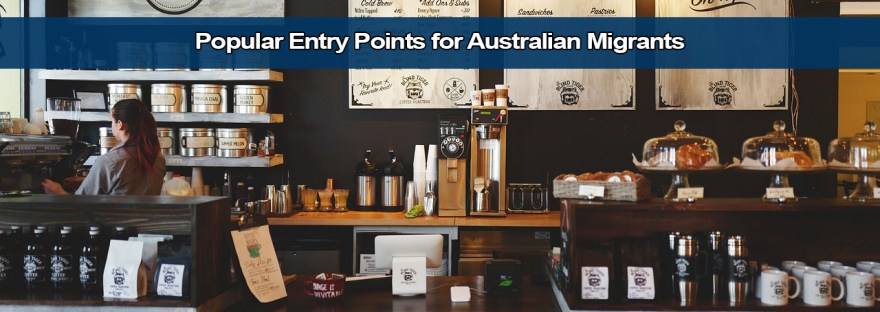
  • Hospitality & Tourism (chefs/cooks; service teams such as waitstaff, baristas, kitchenhands).
  • Transport, Postal & Warehousing (storepersons, forklift, HC/MC drivers).

How to use this (job-side steps)

  • Pick a specific occupation title and align to employer language (ANZSCO wording helps).
  • Check pay bands vs. the market (aim for ≥ median where possible).
  • Line up job-ready tickets: e.g., Cert III (care), RSA/food safety (hospo), LF forklift (warehousing), White Card (construction).
  • Build a target list (20–40 employers per city/region) and tailor applications with metrics.
  • Keep compliance docs ready: police check, medicals, vaccinations, references.

Important caveat (immigration research)

  • We don’t provide visa advice. For official information, start at the Department of Home Affairs Visa pages (Visa Finder and program overviews):
    immi.homeaffairs.gov.au/visas
  • Types of visas you can research independently (no advice implied):
    • Employer-sponsored categories
    • Regional skilled pathways
    • Points-tested skilled visas
    • Designated area/industry programs
    • Family/partner, business/investor programs

If you’d like, we can recommend reputable, licensed migration agents for tailored immigration advice, while we help you get hired.


Living on the Minimum Wage in Australia

Minimum wage isn’t poverty. If you can work and reasonably healthy, you will be OK. Plus, there is a generous government safety net for permanent residents.

  • For travellers: Working holidaymakers can live modestly, covering hostels, share-houses, or camper vans. A full-time minimum wage role provides enough to fund travel and basic savings.
  • For families: Two adults on minimum wage (≈AUD $102,000 combined pre-tax) can afford rent, food, and transport in regional cities (Townsville, Launceston, Ballarat). Supporting children is possible, though still tight.
  • In big cities: Sydney and Melbourne rents make single-income survival on minimum wage nearly impossible; even dual-income households are stretched.

International Comparisons (2025)

Country / RegionHourly Minimum WageEquivalent AUD/hrNotes
AustraliaAUD $24.10$24.10Among highest globally
New ZealandNZD $23.15≈AUD $21.50Slightly lower
USA – New YorkUSD $16.00≈AUD $24Comparable
USA – CaliforniaUSD $16.00≈AUD $24Comparable
Canada – OntarioCAD $17.20≈AUD $19Lower
UKGBP £11.44≈AUD $22Slightly lower
GermanyEUR €12.41≈AUD $20Lower
NetherlandsEUR €13.27≈AUD $21Slightly lower
NorwayCollective agreements≈AUD $28–31Higher, no national minimum
SwitzerlandCHF 22–24≈AUD $38–42Exceptionally high
JapanJPY ¥1,004≈AUD $12Much lower

Conclusion: Risks, Benefits & Next Steps

For migrants, Australia’s bottom rung of work carries real trade-offs:

  • Benefits: Easy to enter, often no skills required, steady income, and the chance to travel or save for goals back home.
  • Risks: Physically demanding, limited residency options, and costly living in major cities.

These roles remain vital to Australia’s economy, keeping fruit on shelves, restaurants staffed, and care facilities running. For migrants, they are gateways to adventure, savings, and cultural exchange — though rarely permanent careers.

👉 To secure work more confidently and quickly, send your CV and job interests to Tate@employmentforimmigration.nz for guidance tailored to Australia’s job market.