

Market Updates, Migrant Resources

Top 5 Job Search Myths for Migrants

By Tate Ulsaker โ€” Employment for Immigration | July 2025

Every migrant who embarks on the journey to find work abroad carries a powerful vision: building a new life, supporting loved ones, and achieving stability. Yet the path often feels like navigating a mazeโ€”full of gatekeepers, automated systems, and silent rejections.

Hereโ€™s the empowering truth: it isn’t your skill or drive holding you backโ€”itโ€™s often the approach. In this post, we tackle the five most common misconceptions that trip up migrant job seekersโ€”and offer clear, actionable consulting steps to overcome them.
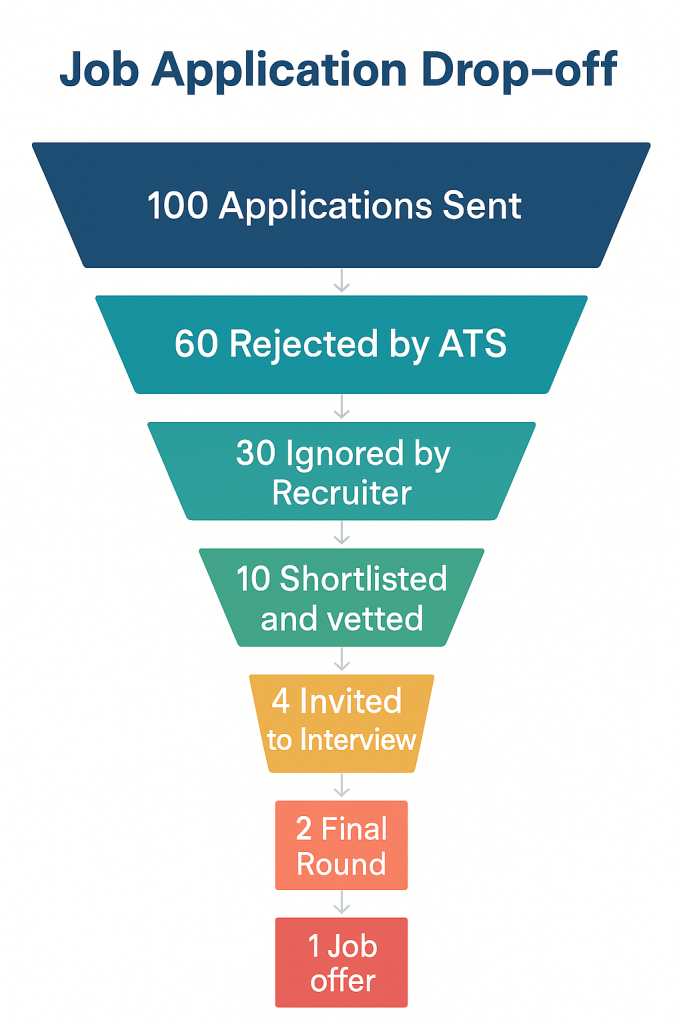

1. Theyโ€™re Vetting You Before the Interview

Mistake: Waiting passively for interview invites.
Reality: Employers begin evaluating during your very first outreach.

Evidence: Anecdotal insights from recruiters show that talent teams rely heavily on early conversational cues. Personalized outreach earns trust earlyโ€”and increases interview chances significantly.

  • Initiate value-first conversations: Send tailored messages with a brief value snapshot and ask for 10โ€“15 minutes of advice.
  • Treat early chats like informal interviews: Prepare to demonstrate interest, ask questions, and show insight.
  • Practice a clear 3-minute intro: Explain who you are, what you offer, and why it connects to them.

2. CVs Are Scanned in Seconds โ€” Be Concise and Strategic

Mistake: Assuming your CV will be thoroughly read.
Reality: Recruiters spend just 6โ€“8 seconds on resumes โ€”and ATS filters often eliminate up to 70% of applications.

3. Results Matter More than Responsibilities

Mistake: Listing tasks instead of achievements.
Reality: Recruiters prioritize measurable impact.
Evidence: CareerSite data suggests only 11% of applicants are deemed suitable during initial screening .

4. Donโ€™t Obsess Over ‘Accredited Employers’

Mistake: Only contacting accredited employers.
Reality: Most employers, accredited or not, are open to migrantsโ€”accreditation takes just days and low cost .

5. Personalized Outreach Beats Templates

Mistake: Relying solely on job portals.
Reality: Generic job applications get ~1โ€“5% responses . Personalized outreach doubles response rates to ~17%.


Free Presentation: Complete Jobโ€‘Finding Journey

Ready for a dive into the migrant job search strategy?

Join our free presentation, where weโ€™ll walk through live demos of:

  • CV restructuring for clarity and achievement
  • Proactive employer outreach
  • Navigating accreditation
  • Optimizing timing and positioning

๐Ÿ“ง Claim your spot:
Send your CV + a short note on your migration/job goals to tate@employmentforimmigration.nz. Weโ€™ll book your sessionโ€”no cost, no obligation.


๐Ÿ“š Sources

  1. Recruiters spend 6โ€“8 seconds on resumes Reddit+2TechRadar+2ERE+2Business InsiderTIME+6HR Dive+6standout-cv.com+6
  2. ATS filters eliminate ~70% of resumes The Ladders+4selectsoftwarereviews.com+4Jobscan+4
  3. One recruiter landed 12 interviews despite low ATS score Boston 25 News+3Business Insider+3selectsoftwarereviews.com+3
  4. Email length 50โ€“125 words, clear CTA & personalization boost responses by ~33% Making That Sale
  5. Accredited employer process quick and affordable emailbroadcast.com

Migrant Resources

NZ Green List Expands: New Residency Pathways for Skilled Workers

New Zealand has expanded its Green List, offering faster residency pathways for high-demand skilled professionals and tradespeople. From 18 August 2025, ten new trade roles will be included in the Work to Residence category. Eligible workers can apply for residence after completing two years of work with an Accredited Employer.

Newly Added Green List Trades (Tier 2 โ€“ Work to Residence)

  • Metal Fabricator
  • Pressure Welder
  • Welder
  • Fitter (General)
  • Fitter and Turner
  • Fitter-Welder
  • Metal Machinist (First Class)
  • Panel Beater
  • Vehicle Painter
  • Paving Plant Operator

Tier 1 โ€“ Straight to Residence Roles

Apply for residency immediately once employed by an accredited employer:

  • Construction & Business Services:
    External Auditor, Internal Auditor, Construction Project Manager, Project Builder, Quantity Surveyor, Surveyor
  • Engineering & Telecommunications:
    Aerospace, Avionic, Civil, Chemical, Electrical, Mechanical, Structural, and Environmental Engineers; Engineering Technicians; ICT & Network Engineers
  • Health & Social Services:
    Medical specialists, Psychiatrists, Surgeons, Radiologists, Anaesthetists, Midwives, Enrolled Nurses, Audiologists, Psychologists, Physiotherapists
  • Science, ICT & Education:
    Veterinarians, Food Technologists, Environmental Scientists, ICT Managers, Software Engineers, Cyber Security Specialists, Multimedia Specialists

Tier 2 โ€“ Work to Residence (Full List)

Apply for residence after 2 years of full-time work with an accredited employer:

  • New Trades (listed above)
  • Other Roles Include:
    Automotive Electrician, Diesel/Motor/Motorcycle Mechanic,
    Electrician, Plumber, Gasfitter, Drainlayer,
    Medical Laboratory Technician, Medical Radiation Therapist, Sonographer, Occupational Therapist,
    Early Childhood and Secondary Teachers (with specialisations),
    Dairy Cattle Farm Managers,
    Construction Machine Operators (Excavator, Bulldozer, Grader, Loader, Earthmoving)

More info: Green List Occupations


What You Need to Qualify
Applicants must meet wage, skills, health, character, English, and age requirements. The median wage thresholds will be updated in August 2025 as part of the annual review.


If you work in one of these roles and want to explore your options, send me your CV for an assessment. Iโ€™ll provide feedback, and if thereโ€™s a good fit, we can meet to plan your next steps in New Zealand

Send to tate@employmentforimmigration.nz for a helpful response in 1-day.

Market Updates, Migrant Resources

2025 Remote Work Trends: Opportunities for Migrants

In 2025, remote work has become a strategic entry point for migrants aiming to establish themselves in New Zealand or Australia. While not a direct route to permanent residency (PR), remote work offers a practical means to build local experience, networks, and demonstrate commitmentโ€”key factors in long-term settlement.โ€‹

๐ŸŒ Remote Work Landscape in 2025

New Zealand:

  • Visitor Visa Flexibility: As of January 27, 2025, New Zealand allows visitors on certain visas to work remotely for overseas employers without breaching visa conditions. โ€‹Immigration New Zealand
  • Digital Nomad Visa: Introduced in early 2025, this visa permits remote workers to stay and work in New Zealand for up to three months, with no minimum income requirement. โ€‹

Australia:

  • Remote Work Acceptance: While Australia doesn’t have a specific digital nomad visa, remote work is widely accepted, especially in sectors like IT, marketing, and customer service. โ€‹

Opportunities for Remote Work

In-Demand Remote Roles:

  • Technology: Software developers, data analysts, and cybersecurity experts.โ€‹
  • Creative Fields: Graphic designers, content creators, and digital marketers.โ€‹
  • Customer Support: Virtual assistants and customer service representatives.โ€‹

Where to Find Opportunities:

  • Job Portals: Websites like Jobgether and FlexJobs list remote positions suitable for applicants in New Zealand and Australia.โ€‹
  • Networking: Platforms like LinkedIn and industry-specific forums can be valuable for finding remote opportunities.โ€‹

Strategies to Secure Remote Work

  • Tailor Your Resume: Highlight remote work experience and relevant skills.โ€‹
  • Upskill: Consider certifications in high-demand areas like project management or digital marketing.โ€‹
  • Time Zone Consideration: Be prepared to work flexible hours to accommodate clients in different time zones.โ€‹
  • Professional Online Presence: Maintain an updated LinkedIn profile and consider creating a personal website or portfolio.โ€‹

โš–๏ธ Legal Considerations

New Zealand:

  • Tax Implications: Working remotely in New Zealand for more than 92 days in a 12-month period may trigger tax obligations. โ€‹
  • Work Restrictions: Remote work must be for an overseas employer; working for a New Zealand-based company requires a different visa. โ€‹

Australia:

  • Visa Requirements: Ensure your visa permits remote work; some visas may have restrictions. โ€‹Immigration New Zealand
  • Tax Residency: Staying in Australia for more than six months may classify you as a tax resident, with associated obligations.โ€‹

Pros and Cons of Remote Work Migration

Pros:

  • Flexibility: Ability to work from anywhere, allowing for travel and exploration.โ€‹
  • Cost Savings: Potentially lower living costs compared to major cities.โ€‹
  • Work-Life Balance: Opportunity to design a lifestyle that suits personal preferences.โ€‹

Cons:

  • Isolation: Lack of in-person interaction can lead to feelings of loneliness.โ€‹
  • Time Zone Challenges: Coordinating with teams in different time zones can be demanding.โ€‹
  • Legal Complexities: Navigating visa requirements and tax obligations can be complex.โ€‹

Final Thoughts

Embracing remote work in New Zealand or Australia offers exciting possibilities for migrants. By understanding the legal landscape, identifying suitable opportunities, and adopting effective strategies, you can successfully navigate this path. Remember, while the journey may have its challenges, the rewards of flexibility and global experience are well worth the effort.โ€‹

Market Updates, Migrant Resources

Navigating AI: A Designerโ€™s Guide to Future-Proofing

AI is no longer just a future conceptโ€”itโ€™s here, and itโ€™s changing how design gets done. For many graphic designers, this brings both opportunity and anxiety. Will clients stop hiring creatives? Will algorithms do all the work? Or is there a smarter path forward?

This blog explores the real and perceived threats from AI over the next 1, 5, and 10 yearsโ€”and shows how creative professionals can adapt, using both strategy and mindset.

To support these insights, weโ€™ve embedded key moments from a coaching session with a talented graphic designer. These YouTube Shorts offer real-time reflections on navigating AI, taking ownership, and keeping human creativity front and center.


๐Ÿ” 1-Year Outlook: AI Tools Are Everywhereโ€”Now What?

Real Threats

AI design tools like Midjourney, Canva AI, and Adobe Firefly now enable non-designers to produce compelling content quickly. This reduces demand for junior freelance work and entry-level design support.

Perceived Threats

Designers worry: โ€œIf AI can create in seconds what takes me hours, am I already obsolete?โ€


๐ŸŽฅ Short: Embracing AI โ€” Adapting Skills for a New Era

“You donโ€™t need to click and hope. You need someone to take responsibilityโ€ฆ to turn hopes into outcomes.”

๐Ÿ’ก Key Takeaway: AI can generate options, but brands still want accountability. Clients arenโ€™t just buying imagesโ€”theyโ€™re buying confidence, refinement, and strategic thinking. Thatโ€™s where you come in.


โœ… Response Strategy

  • Learn the tools, but donโ€™t rely on them blindly.
  • Position yourself as a decision-maker, not just a tool-user.
  • Help clients go from โ€œclick and hopeโ€ to refined outcomes that reflect brand values and user needs.

๐Ÿ“‰ 5-Year Outlook: Automation Shrinks the Middle

Real Threats

As AI continues evolving, more companies will automate branding kits, templates, and campaign assets. This puts pressure on mid-tier designers who once thrived in this space.

Perceived Threats

The fear here is deeper: โ€œCreativity is now AIโ€™s job, not mine.โ€


๐ŸŽฅ Short: Harnessing AI to Amplify Your Unique Strengths

“What if AI does the busy work, so you can focus on what you do best? What if it brings your strengths forward, not replaces them?”

๐Ÿ’ก Key Takeaway: AI is only a threat if you compete with it on its terms. Instead, use it to amplify your strengths, accelerate your workflow, and differentiate your offering.


โœ… Response Strategy

  • Focus on areas where human judgment and taste matter.
  • Use AI to speed up initial drafts, generate variations, or prototype ideasโ€”then apply your eye for what works.
  • Present yourself as a hybrid designer: part creator, part strategist, part technologist.

๐ŸŒ 10-Year Outlook: From Creator to Creative Leader

Real Threats

Within a decade, itโ€™s possible that AI could handle full creative productionโ€”concepts, layouts, copy, and testingโ€”all with minimal human input. Designers who stick to execution-only roles may find themselves left behind.

Perceived Threats

This triggers existential fears: โ€œWill there even be a place for me?โ€


๐ŸŽฅ Short: Understanding AI โ€” The Illusion of Thinking in Design

“It mimics care. It mimics thought. But itโ€™s not real. Youโ€™re still the one behind the desk, taking responsibility.”

๐Ÿ’ก Key Takeaway: AI may simulate style, emotion, or even empathyโ€”but it canโ€™t truly care or take ownership. A future-proof designer is one who leads, guides, and brings authenticity to the work.


โœ… Response Strategy

  • Evolve from executor to editor and brand guardian.
  • Lead with empathy, context, and ethical judgmentโ€”things AI can’t replicate.
  • Build a personal brand that connects human-to-human, not just machine-to-client.

๐Ÿ” Closing Loop: The Value of Human-Led Design

๐ŸŽฅ Bonus Short: Transform Clicks into Results โ€” The AI Accountability Solution

โ€œYou donโ€™t need someone who clicks and hopes. You need someone who takes ownership.โ€

๐Ÿ’ก Final Thought: AI is powerful, but clients still want a human in the loop. Your value is not in beating AIโ€”itโ€™s in using it well, taking responsibility, and showing care in ways a program never can.


๐Ÿงฉ Summary Table

TimeframeReal ThreatsPerceived ThreatsWhat You Can Do
1 YearClients use AI for quick jobsโ€œAI is faster than meโ€Learn the tools, lead the outcomes
5 YearsMid-tier roles shrinkโ€œAI does all the creativityโ€Specialize, co-create, differentiate
10 YearsAI runs full campaignsโ€œThereโ€™s no place leftโ€Become a leader, not just a doer

๐ŸŽฌ Want to See the Discussion?

You can watch all the clips from this coaching session here:


๐Ÿ’ฌ Final Message to Designers

AI is not your enemyโ€”itโ€™s your wake-up call.

Use it to accelerate what you do, not replace who you are. Clients still want trust, judgment, and vision. Be the one who brings it all together.

Migrant Resources

A Comprehensive Guide to Housing for New Migrants in Australia

Australia’s housing landscape presents both opportunities and challenges for new migrants. Whether you’re arriving for work, study, or family reunification, securing the right accommodation is one of the first major steps in your settlement journey. This guide explores the key aspects of the Australian housing marketโ€”from types of accommodation and typical costs to short-term strategies, rental processes, home ownership, and support systemsโ€”to help migrants make informed and confident decisions.

Understanding the Housing Landscape

Australiaโ€™s major cities (Sydney, Melbourne, Brisbane) are known for high housing costs, while regional and suburban areas offer more affordability but often fewer services or job opportunities. The current housing crisis has made affordable rentals harder to find, especially for temporary visa holders and those from non-English-speaking backgrounds who may face language barriers, lack of references, or unfamiliar rental systems (The Conversation, RMIT).

Humanitarian migrants often experience transitional housing shifts. Research shows that around 59% of humanitarian entrants move at least once shortly after arrival as they shift from temporary to more permanent arrangements (AIFS – BNLA).

Housing Types and Costs

Accommodation Types

  • Shared Housing: Rooms in shared homes. Cost: AUD $150โ€“$250/week
  • Studio Apartments: Single self-contained units. Cost: AUD $300โ€“$450/week
  • One-Bedroom Units: Suitable for individuals or couples. Cost: AUD $400โ€“$600/week
  • Two-Bedroom Units: Ideal for small families. Cost: AUD $550โ€“$800/week
  • Full Houses: Suitable for larger families. Cost: AUD $600โ€“$1,000+/week

These costs vary by location. Sydney and Melbourne are the most expensive cities, while regional and suburban areas offer lower rental prices (Settlement Service).

Where to Live: Urban, Suburban or Regional?

  • Urban Centres: High cost, high opportunity. Best for employment access but intense rental competition.
  • Suburban Areas: Balanced affordability and access to jobs and services.
  • Regional Communities: Lower costs and close-knit communities, but fewer jobs and services.

Lifestyle factors like school quality, public transport, and cultural community access also impact the best choice for you (Australian Visa Advice).

Short-Term vs. Long-Term Housing

Short-Term Strategies

Temporary options include:

  • Hostels
  • Serviced apartments
  • Airbnb

These options give time to explore neighborhoods and build documents (rental history, bank statements) needed for longer-term rentals (AIFS – BNLA).

Long-Term Transition

Many migrants secure long-term leases within 3โ€“6 months. Itโ€™s common to start with temporary housing before finding something more permanent. Preparation and attending open inspections help with successful rental applications (AIFS – BNLA).

Navigating the Rental Market

Application Process

Youโ€™ll need:

  • ID (Passport or visa)
  • Proof of income/employment
  • References or alternative documentation (bank records, job contracts)

Being prepared allows faster applications in competitive markets (Australian Visa Advice).

Tenant Rights and Legal Terms

Understand:

  • Lease agreements
  • Bond (security deposit)
  • Condition reports
  • Tenant rights (vary by state)

You can get legal advice from community centers or tenant unions if unclear (Home Affairs).

Managing Costs and Avoiding Housing Stress

Housing should not exceed 30% of your income. Higher than this can lead to stress and limit spending on food, transport, and health (Refugee Council).

If you’re struggling:

  • Explore house sharing
  • Look in outer suburbs
  • Use rent assistance via Centrelink (if eligible)
  • Get help from financial counselors

Considering Home Ownership

Buying a Home: Costs and Rules

  • Deposit: 10โ€“20% of purchase price
  • Other Costs: Stamp duty, legal fees, inspection costs
  • Median Prices: AUD $885,000+ (house), AUD $673,000+ (unit) (Your Mortgage)

For non-permanent residents, FIRB approval is often required. Some banks impose stricter lending rules for temporary visa holders (Home Affairs).

Mortgage Preparation

  • Establish good credit history
  • Seek pre-approval
  • Compare lenders and interest rates
  • Consider working with a broker familiar with migrant lending

Challenges to Expect

Language & Culture

  • Language barriers can make it harder to understand leases and negotiate.
  • Cultural expectations around housing differ.
  • Seek bilingual support or use translated materials to understand your rights.

Discrimination

  • Discrimination based on nationality or ethnicity still exists.
  • Know your rights under anti-discrimination laws.
  • Tenant advocacy groups can help with complaints or mediation.

Support Services

Government Programs

  • Centrelink: Rent assistance
  • Humanitarian Services: Short-term housing support
  • State Housing Authorities: Long public housing waitlists, but still an option

Community Support

  • Ethnic community groups
  • Religious charities
  • Migrant advocacy networks

These groups help with:

  • House searches
  • Inspections
  • Paperwork
  • Legal support

Online Tools

  • Realestate.com.au and Domain.com.au for housing listings
  • MoneySmart for budgeting and financial tools
  • Settlement Services for legal and housing rights info (Home Affairs)

Top Cities for New Migrants

CityJob SectorsCost of LivingNotes
SydneyFinance, Tech, EducationVery HighHigh-paying jobs but expensive
MelbourneCreative, HealthcareHighCultural hub and balanced living
BrisbaneHealth, HospitalityModerateWarm climate and outdoor lifestyle
AdelaideTech, EducationLow-ModerateFamily-friendly and quiet
PerthMining, Public ServicesModerateHigh salaries and relaxed lifestyle
HobartTourism, ArtsLowPeaceful and scenic
Gold CoastTourism, RetailModerateCoastal living with lower costs
CairnsEnvironmental SciencesLowTropical lifestyle and relaxed pace

Final Thoughts

Your housing journey in Australia wonโ€™t be perfect from day oneโ€”and thatโ€™s okay. Many migrants move 2โ€“3 times before settling. The key is to plan carefully, know your rights, and ask for help when needed.

Start with short-term shelter, learn the market, build documentation, and set clear financial goals. From there, you can work towards a secure, long-term place that suits your needs.

Australia welcomes skilled and motivated newcomersโ€”with the right approach, your new home is within reach.

Migrant Resources

NZ Jobseeking Resources for Care Workers

Care Workers โ€“ Are You Facing Challenges Finding Work in New Zealand?

Here is a collection of resources for Care Workers to help you demonstrate readiness and a proactive approach to hiring managers in New Zealand. Each section includes a description and relevant URLs to guide your preparation effectively.

1. Licensing and Professional Standards


Joining professional organisations can validate expertise and provide networking opportunities.

  • Aged Care Association: Training and standards for Care Workers.
    URL: https://www.nzaca.org.nz/ (Search: “Membership”)
  • Healthcare Assistants New Zealand: Professional standards for Care Workers.
    URL: https://www.health.govt.nz/ (Search: “Care Worker Standards”)


2. Qualification Equivalency Assessment


If you are an overseas-trained Care Worker, you may need to have your qualifications assessed to align with New Zealand standards.


3. Visa and Immigration Documentation


A valid work visa is required for Care Workers to work in New Zealand.


4. Continuing Professional Development (CPD)


Ongoing professional development is essential for Care Workers to maintain and enhance their skills.


5. Compliance with Industry Standards


Care Workers must adhere to standards of care and healthcare regulations in New Zealand.


6. Specialized Tools and Technologies


Proficiency in modern healthcare tools and technologies is essential for success in the field.


7. Networking and Job Opportunities


Connecting with New Zealandโ€™s healthcare community can improve your chances of finding employment.


8. Cultural Competence and Local Context


Understanding New Zealandโ€™s cultural context and the principles of the Treaty of Waitangi is essential for Care Workers.


9. Opportunities in Industry Innovation


Opportunities in healthcare innovation are available, especially with technological advancements and remote care.


Get 17-Years of Experienced Support with Tateโ€™s Employment for Immigration

For experienced support with your job search as a Care Worker, visit: Employment for Immigration Services or email Tate at tate@employmentforimmigration.nz.