
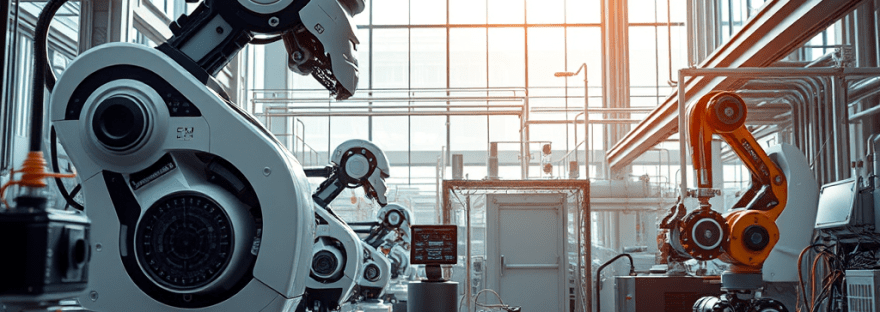
The Rise of Industry 4.0
Industry 4.0, also known as the Fourth Industrial Revolution, is transforming the economic and industrial landscape of Australia and New Zealand. It integrates cutting-edge technologies such as artificial intelligence (AI), the Internet of Things (IoT), robotics, cloud computing, and data analytics into manufacturing and industrial processes. This revolution is not just changing the way products are made but also reshaping job markets, industry competitiveness, and economic growth.
How Industry 4.0 is Reshaping Manufacturing
The manufacturing sector is at the forefront of this revolution, with smart factories leveraging automation, real-time monitoring, and advanced data analytics to enhance productivity. Notable trends include:
- Smart Factories: Investment in connected systems that collect and analyze data across production lines is increasing. Siemens’ Tonsley Innovation District in South Australia is a prime example of a smart factory hub.
- Advanced Manufacturing: The industry is moving towards AI-driven, robotics-enhanced production lines that allow for increased precision and efficiency.
- Data-Driven Decision Making: 87% of manufacturing managers in Australia and New Zealand now prioritize data analytics, surpassing global averages.
- Sustainability and Green Manufacturing: 72% of industry leaders now prioritize sustainable materials, energy sources, and waste reduction.
- Supply Chain Resilience: The integration of digital tracking tools is helping businesses anticipate and respond to disruptions more effectively.
The Impact on Major Industries
While manufacturing leads the charge, Industry 4.0 is influencing multiple sectors across Australia and New Zealand.
Mining and Resources
The mining sector is benefiting from automation, AI-driven exploration, and remote operations. Autonomous haulage trucks, predictive maintenance powered by machine learning, and digital twin technology are streamlining operations and reducing risks. However, traditional mining jobs may decline as automation increases.
Agriculture and Food Production
Smart farming techniques, precision agriculture, and IoT-enabled monitoring systems are improving crop yields and resource efficiency. Drones, automated irrigation, and AI-based pest management are transforming agribusiness, making it more sustainable and profitable.
Construction and Engineering
The use of 3D printing, digital modeling (BIM), and automated machinery is revolutionizing construction. Robotics and AI are reducing manual labor while increasing efficiency, safety, and sustainability in infrastructure projects.
Logistics and Supply Chain
IoT, blockchain, and AI-driven forecasting are helping businesses optimize logistics networks, predict demand surges, and manage inventory in real-time. Automation in warehousing and transport is reducing operational costs and improving efficiency.
Healthcare and Biotech
Telehealth, AI diagnostics, and robotic surgeries are advancing medical care. The digital transformation of patient records and AI-driven drug discovery are opening new frontiers in biotech innovation and personalized medicine.
Winners and Losers in the Economy
As with any industrial revolution, Industry 4.0 creates both opportunities and challenges.
Winners
- Skilled Tradespeople & Engineers: Those specializing in automation, robotics, IoT, and AI integration will be in high demand.
- Data Scientists & Cybersecurity Experts: As industries become increasingly data-driven, professionals skilled in data analytics, cybersecurity, and AI development will see growing opportunities.
- Sustainability Specialists: Experts in green manufacturing, renewable energy, and waste management will benefit from the push toward sustainability.
- IT Professionals & Digital Transformation Consultants: Businesses are seeking guidance on integrating Industry 4.0 technologies effectively.
Losers
- Low-Skilled Manual Laborers: Jobs in traditional manufacturing, warehousing, and even some service industries are at risk due to automation.
- Legacy Businesses That Fail to Adapt: Companies that resist digital transformation may struggle to compete with data-driven and automated rivals.
How Skilled Professionals Can Adapt
To stay competitive in an Industry 4.0-driven job market, professionals need to upskill and align with emerging technologies:
- Engineers & Tradespeople: Gaining expertise in AI-assisted machinery, smart factory operations, and industrial automation will be critical.
- IT & Data Professionals: Expanding knowledge in AI, machine learning, cybersecurity, and cloud computing will ensure relevance.
- Managers & Business Leaders: Embracing data-driven decision-making, digital project management, and sustainability leadership will enhance career prospects.
Where Are the Gaps for Skilled Migrants?
As Industry 4.0 accelerates, skill shortages are emerging, creating opportunities for foreign professionals in high-demand fields. Areas with strong demand include:
- Industrial Automation & Robotics Engineers
- AI & Machine Learning Specialists
- Cybersecurity Experts
- Data Scientists & Analysts
- Renewable Energy & Sustainability Experts
- Advanced Manufacturing Technicians
- IoT & Cloud Computing Specialists
- Smart Logistics & Supply Chain Analysts
A Bright Future: Economic Growth and High Quality of Life
The Fourth Industrial Revolution presents both disruption and opportunity. For those who adapt, Australia and New Zealand offer strong economies, global leadership in advanced industries, and an enviable quality of life. With the right skills and strategies, professionals can leverage Industry 4.0 to secure high-paying, future-proof careers in one of the world’s most dynamic regions.
Sources by Category
General Industry 4.0 Overview
- SAP Industry 4.0: https://www.sap.com/australia/products/scm/industry-4-0/what-is-industry-4-0.html
- KPMG Industry 4.0 Report: https://kpmg.com/au/en/home/insights/2023/10/industry-4-0-industrial-manufacturing.html
Manufacturing and Automation
- Gov2 on Australian Manufacturing: https://www.gov2.com.au/the-future-of-australian-manufacturing-embracing-industry-4-0/
- Robycs Technology in Australia: https://robycstechnology.com.au/industry-4-0-in-australia/
- Tulip on Smart Factories: https://tulip.co/ebooks/industry-4-0/
Mining and Resources
- IBM Mining Technology Report: https://www.ibm.com/think/topics/industry-4-0
- EY Mining & Automation Insights: https://www.ey.com/en_au/mining-metals/ai-in-mining
Agriculture and Food Technology
- AgTech Adoption in Australia: https://www.mbie.govt.nz/business-and-employment/economic-development/industry-transformation-plans/advanced-manufacturing
- Precision Farming Solutions: https://www.callaghaninnovation.govt.nz/assets/documents/Industry-4-0/Aotearoas-Industry-4.0-journey-november-2024.pdf
Healthcare & Biotech
- AI in Healthcare: https://business.canon.co.nz/insights/digital-transformation-in-manufacturing-industry
- Smart Healthcare Solutions: https://www.smartindustry.com/benefits-of-transformation/digital-transformation/article/55132388/smart-factories-a-roadmap-to-optimization-not-overhaul
Discover more from Employment for Immigration to New Zealand, Australia and Beyond
Subscribe to get the latest posts sent to your email.
 Employment for Immigration to New Zealand, Australia and Beyond